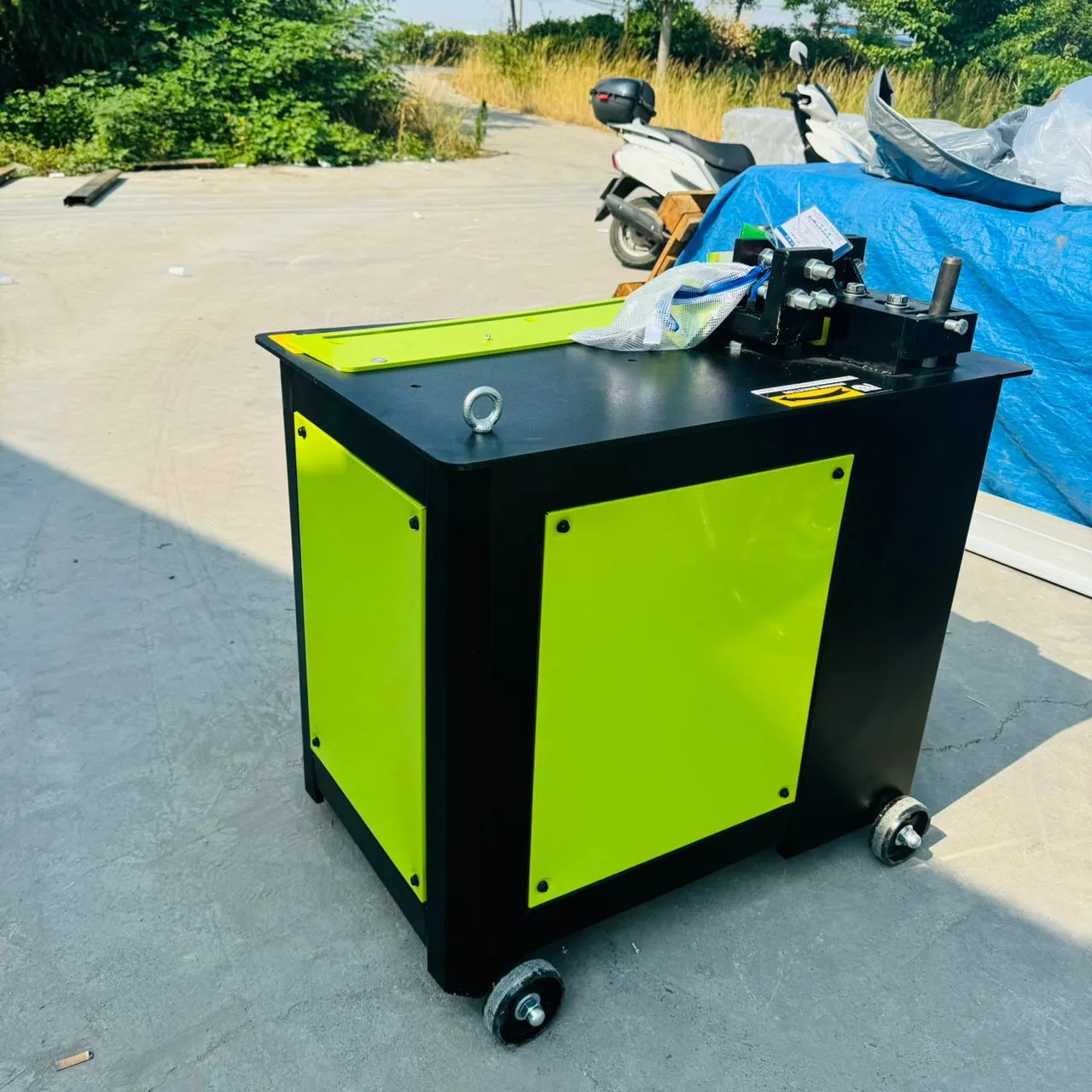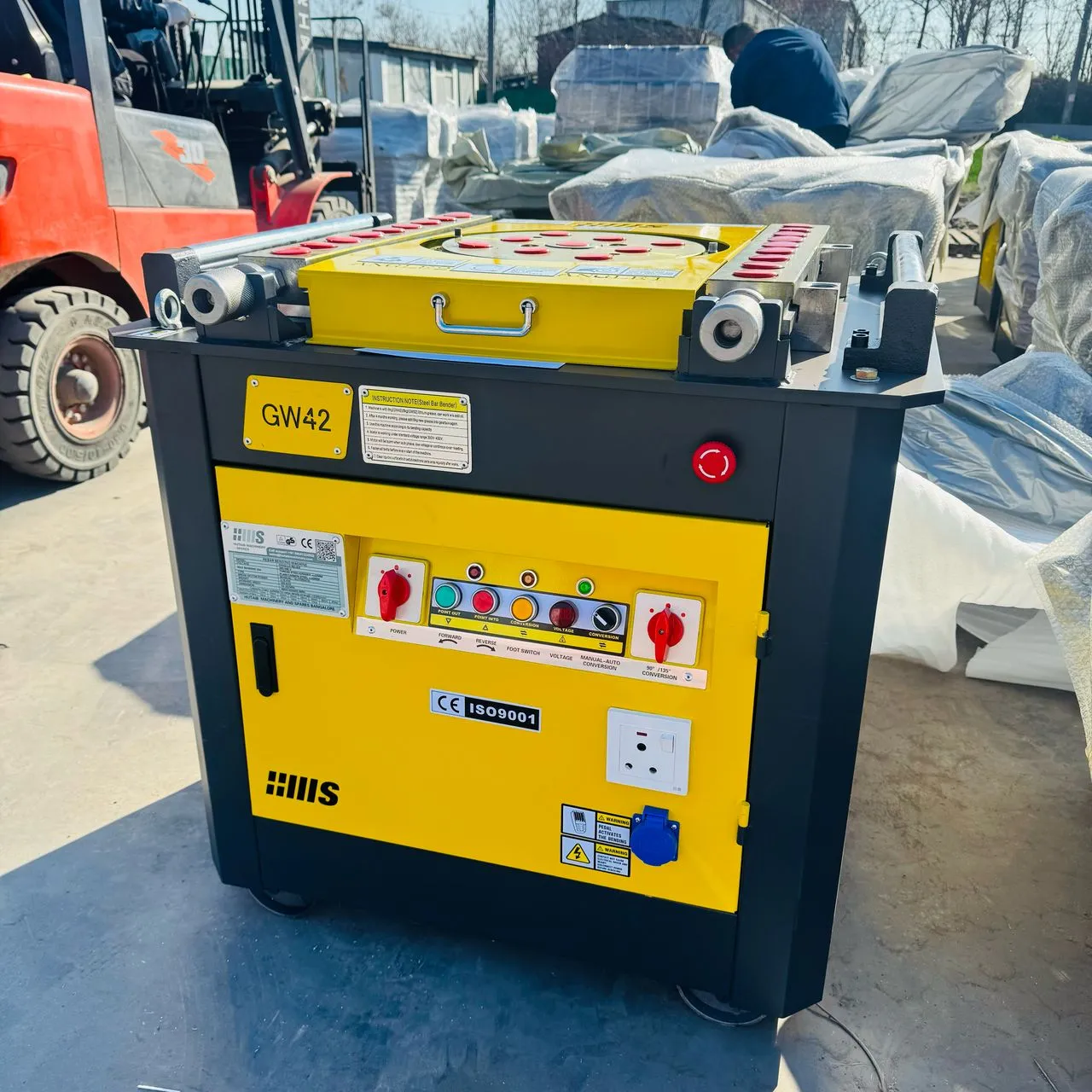
For most Indian contractors, manual here means a standard motorised bending machine where the operator sets each angle, and automatic means a programmed CNC bender. Buy the standard motorised machine if you run normal RCC sites; it is fast, consistent and cheaper. Buy the CNC bender only if you run a high volume bar yard or repeat complex shapes, because its higher price needs steady programmed batches to pay off.
Is bending bar by hand ever enough?
Bending bar by hand over a pipe needs no machine cost, and that is its only advantage. It is slow, the angles drift from one stirrup to the next, and it tires workers fast. On anything beyond a tiny job it costs more in labour and rejected bends than a machine would. Once you are bending in any quantity, a motorised machine wins easily.
Standard motorised machines: the workhorse
A motorised machine like the GF25 Three Phase or the heavier GW42 does the hard work while the operator sets the angle and feeds the bar. It is fast, the angles are consistent, and one trained operator keeps it running all day. The operator still sets each angle and counts pieces, so output depends on the person, but a good operator turns out far more than hand bending and with much better repeatability. For the large majority of sites this is the right level of automation. Maintenance is simple, spares are easy to get, and any trained bar worker can be taught to run it in a short time. That low running cost is a big part of why these machines stay the standard on Indian RCC sites.
When does automatic CNC bending make sense?
The CNC Steel Bar Bender takes it further. You program the angle and the count, and the machine repeats it exactly without the operator setting each bend. That pays off in two situations: very high volume, where the speed and reduced handling add up, and complex repeated shapes, where programmed accuracy beats manual setting. CNC also needs less bending skill from the operator, which helps where trained hands are short. The trade off is a higher purchase price and the need for steady, large volume to justify it. If a CNC machine sits idle half the week, it is the wrong buy, because its value comes from running long programmed batches. Match it to real, ongoing demand rather than a one off large job.
Quick comparison
| Factor | Standard motorised | Automatic CNC |
|---|---|---|
| Speed | Fast, operator paced | Fastest, programmed |
| Accuracy | Good, depends on operator | Very high, repeatable |
| Skill needed | Trained operator | Lower, set and run |
| Upfront cost | Lower | Higher |
| Best for | Most sites | High volume yards |
Which one should you buy?
Be honest about your volume. If you run normal RCC sites and your bending team keeps up with the pour, a standard motorised machine sized to your bar is the sensible buy, and you can read how to choose a bar bending machine to pick the model. If you run a dedicated bar yard turning out huge quantities or repeated complex shapes, the CNC bender earns its higher price through speed and consistency. For pricing on both routes, see our bar bending machine price guide. A useful test is to count a normal week of stirrups and cranks. If a single operator on a motorised machine clears that comfortably, you do not need CNC yet, and the money is better spent on a sturdier standard machine and a spare set of pins. Still unsure? Tell HMS your daily output and bar sizes, and we will tell you honestly which level fits.